Learn about insulated sandwich panels used in container houses, including rock wool, EPS foam, polyurethane and glass wool cores. Our steel structure container house factory provides customizable wall and roof panel solutions for homes, offices, camps, temporary buildings and overseas modular construction projects
Sandwich panel
In the production of steel-structure container houses, the steel frame determines the building’s overall structural support system, while the walls, roofing, and insulation systems directly influence living comfort, thermal insulation, soundproofing, and the user experience across various climatic conditions
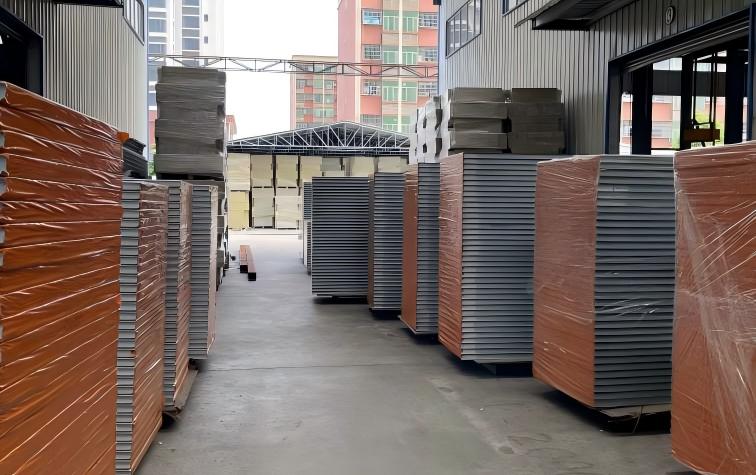
For projects involving container houses, detachable container units, modular homes, or prefabricated buildings, a sandwich panel is far more than just a simple wall panel
It is, in fact, a crucial component of the building’s entire envelope system
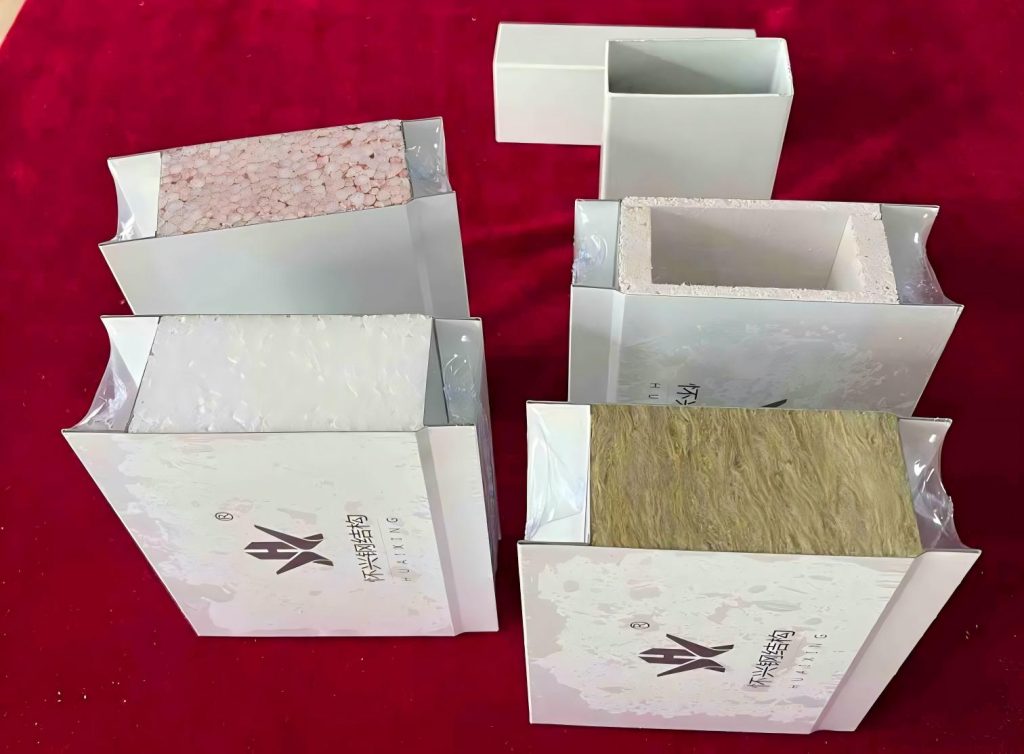
Depending on project-specific factors—such as budget, operating environment, climate conditions, and requirements for fire resistance and thermal insulation—various types of core materials can be selected for the sandwich panels. Common core materials include:
Rock Wool
EPS (Expanded Polystyrene)
Polyurethane
Glass Wool
Features
Rock wool is a common type of mineral fiber insulation material
In modular and steel-structure construction, rock wool sandwich panels are frequently used for projects requiring high standards of fire resistance, thermal insulation, and soundproofing
One of the key characteristics of rock wool is its non-combustibility. According to official ROCKWOOL documentation, rock wool fibers are non-combustible and offer excellent high-temperature resistance; however, the fire rating for a specific construction project must be determined based on the complete wall or roof system, material specifications, and local testing standards, rather than being assessed solely on the basis of the core material
EPS stands for Expanded Polystyrene
EPS sandwich panels are lightweight, easy to process, and relatively cost-effective, making them widely used in many temporary structures and budget-sensitive projects
For projects with lower fire-resistance requirements where cost control and rapid construction are priorities, EPS sandwich panels serve as an economical solution
While EPS material itself offers good thermal insulation properties, actual construction projects require a comprehensive assessment that takes into account local building regulations, fire safety codes, the intended use of the building, and the requirements of the complete wall system
Polyurethane
Polyurethane-based core materials are highly valuable in construction projects requiring superior thermal insulation performance
Industry data on insulated sandwich panels indicates that foam cores such as PUR and PIR are widely used in metal insulation panel systems, with thermal resistance influenced by the specific material and thickness. As actual performance varies between products, direct comparisons should be avoided; instead, decisions should be based on specific product data and project requirements
Consequently, for overseas residential projects, developments in cold regions, and buildings requiring minimized indoor thermal exchange, appropriate PU or PIR insulation systems can be selected based on local climate conditions and energy efficiency standards
Glass wool is a type of thermal insulation material made from glass fibers
It is lightweight and suitable for use in thermal insulation and soundproofing systems within both the construction and industrial sectors
Data on glass fiber insulation indicates that these products can be applied to walls, roofs, and other building envelope components or equipment insulation, helping to reduce heat transfer and improve acoustic performance
For projects that require reducing the building’s dead load while achieving thermal insulation and a certain level of soundproofing, glass wool is a viable option
Conclusion
Sandwich panels are a crucial component of container houses
Rock wool effectively meets fire resistance and sound insulation requirements; EPS offers a cost-effective solution for modular construction; PUR and PIR are better suited for projects demanding high thermal insulation performance; and glass wool is applicable to lightweight thermal and acoustic insulation systems
For professional manufacturers of steel-structure container houses, the key lies not merely in producing a single standard product, but in selecting the most appropriate materials and modular configurations based on the client’s intended use, project location, climatic conditions, transportation methods, and technical specifications