Coffee shops are no longer just places to serve drinks; they are gradually becoming important spaces for young people to socialize, relax, and exchange ideas. Under this trend, more and more designers are exploring architectural forms with visual impact and environmental protection concepts. Among them, container coffee shops have rapidly gained popularity due to their flexible structure, industrial style, and modular construction advantages
Creative Architectural Concept
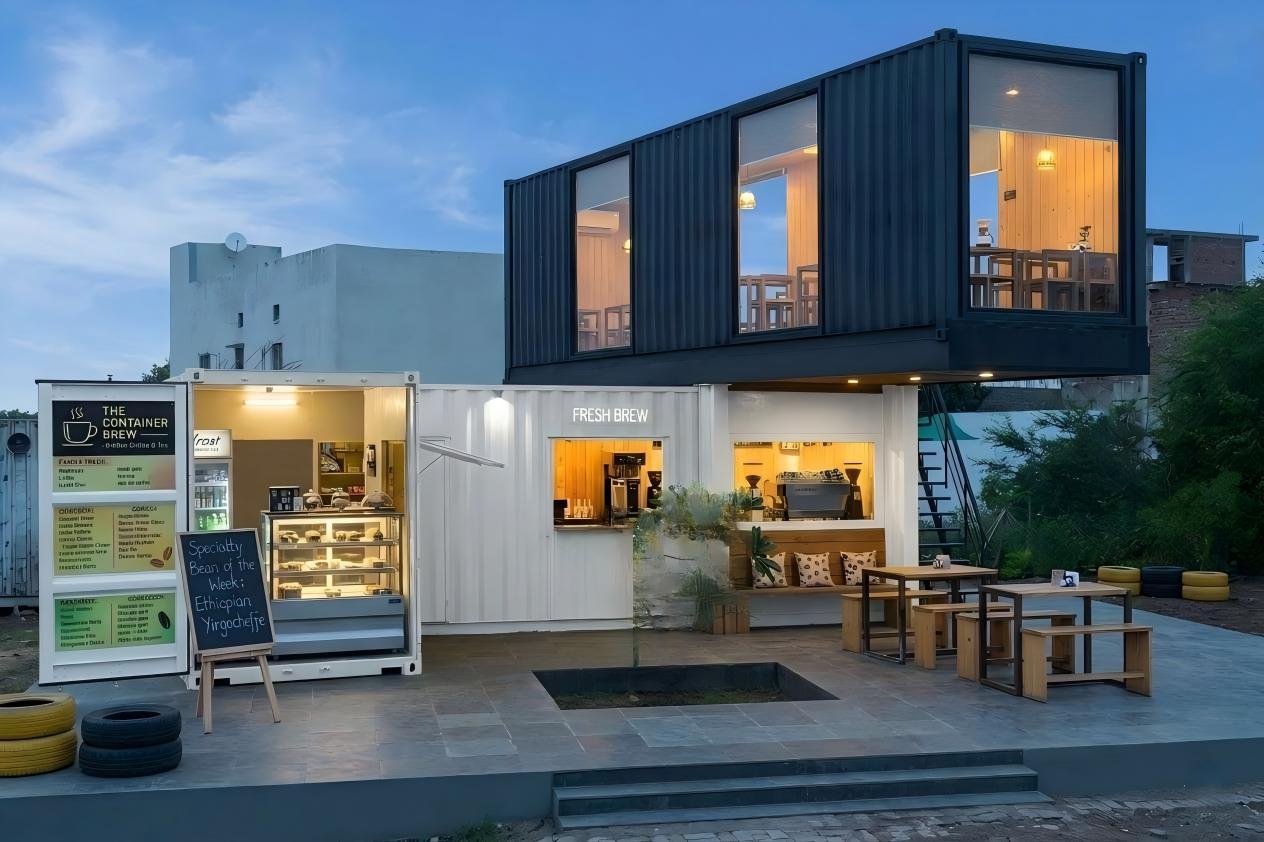
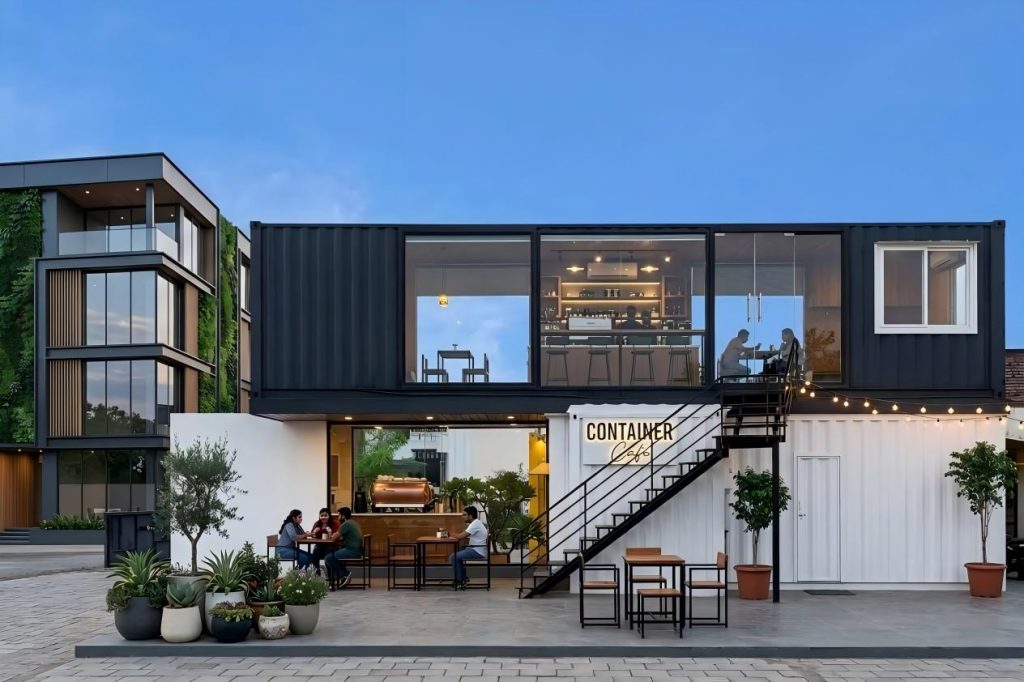
This project uses multiple steel container modules as the primary building elements. By carefully arranging them, the architects created a structure resembling an open “L” shape. This design gives the building a sculptural appearance while also allowing for flexible interior layouts,Located at the southwest corner of the site, the café stands prominently when viewed from the nearby intersection. Its striking geometric form immediately captures attention, making it a visual landmark within the neighborhood. This type of modular café architecture allows for fast construction and easy expansion, making it ideal for modern urban commercial spaces.
The architects drew inspiration from container housing and modular building trends, blending industrial aesthetics with relaxed social spaces to create a building that feels both modern and welcoming. This design philosophy emphasizes not only the building’s appearance but also the interaction between people and space.
The ground floor is designed on a low platform, where an opened L-shaped container creates the main functional area of the café.
This area includes:
Ice cream display counter
Coffee preparation bar
Kitchen workspace
Cashier counter with a small seating area
This layout maximizes spatial efficiency while allowing customers to observe the coffee-making process, enhancing the overall interactive experience
During the daytime, the café exterior appears bright and vibrant, showcasing a clean industrial aesthetic that contrasts with the surrounding urban environment. At night, the cantilevered black container blends into the darkness, while the warm interior lighting becomes the visual highlight. This lighting effect creates a soft and artistic visual atmosphere, transforming the building into a glowing social hub after sunset.
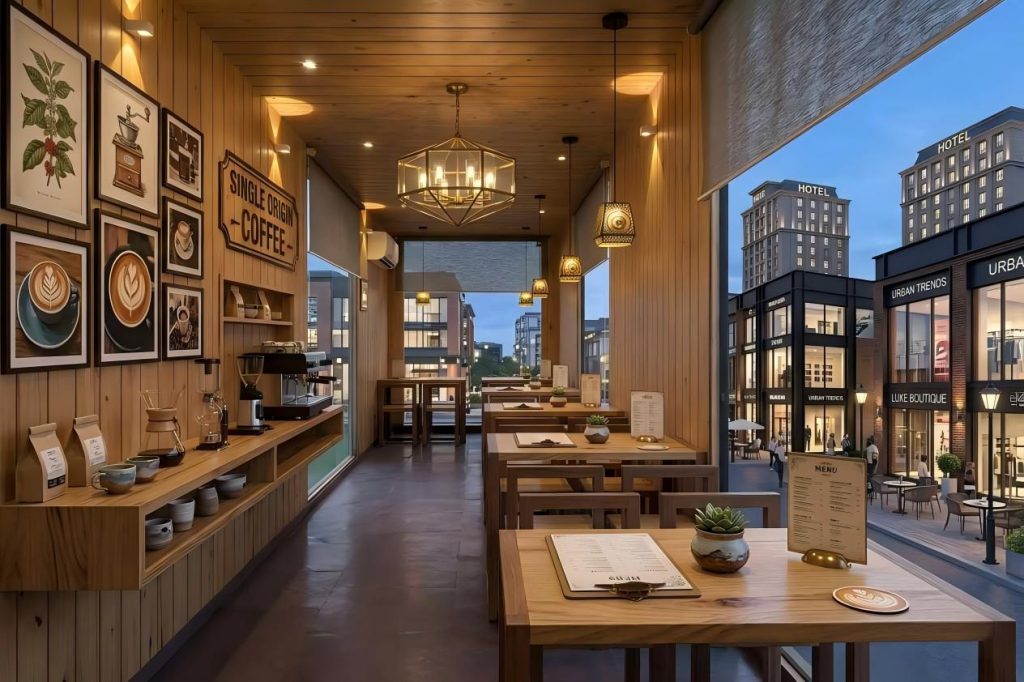
To balance the strong industrial appearance of the container structure, designers introduced warm materials inside the café. Reclaimed packaging wood was reused for wall panels and furniture, adding natural textures to the interior space. Warm ambient lighting further enhances the cozy and rustic atmosphere, creating a welcoming place where visitors can relax. This contrast defines the café’s character: a bold industrial exterior paired with a warm and inviting interior.
Conclusion
A unique container café design is more than just an architectural style; it represents a creative commercial space that combines sustainability, modern design, and urban culture. Through its L-shaped structure, open interior layout, and warm design elements, the café successfully creates a space that is both visually striking and emotionally welcoming.
In the future, as modular construction and sustainable design continue to evolve, container cafés will likely become an increasingly important choice for creative urban commercial spaces.